
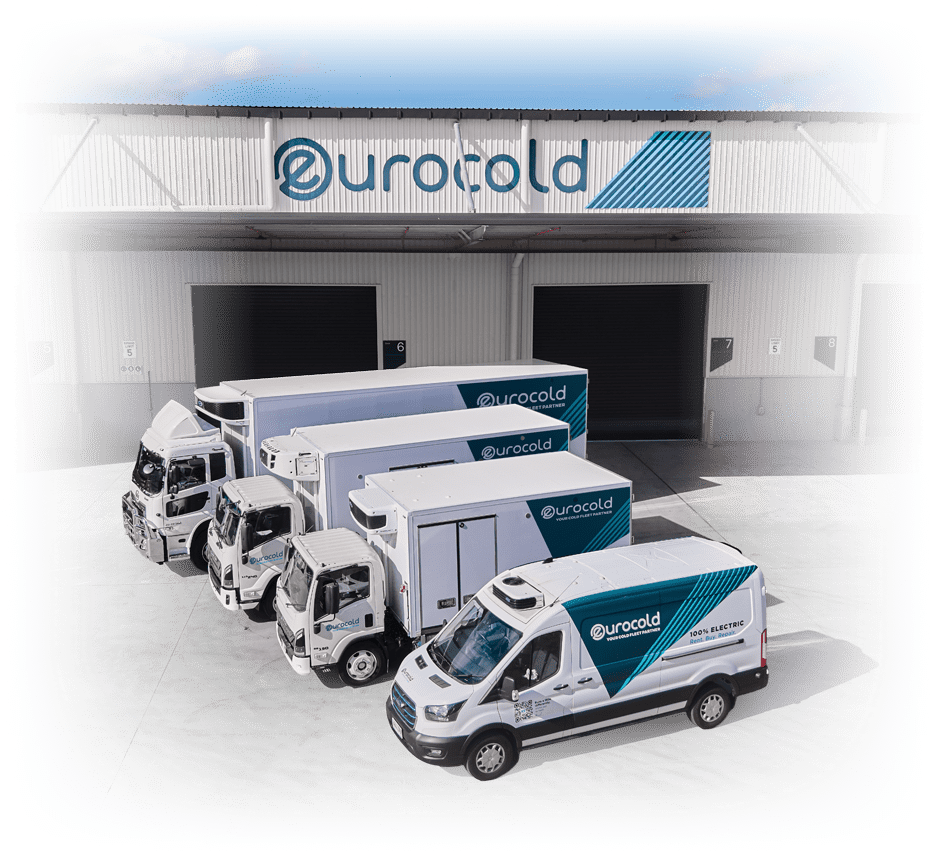
You know you need a cold vehicle. What you are not sure about is which one. A refrigerated van might be all your business needs, or it might leave you short on capacity at exactly the wrong moment. A refrigerated truck might be the right call, or it might be more vehicle than your daily runs actually require.
This guide cuts through the options. We look at what separates a refrigerated van from a refrigerated truck, which operations suit each, and how to make the call without second-guessing yourself every peak season.
What actually separates a refrigerated van from a refrigerated truck?
The line between the two is less about temperature performance and more about scale. Both can hold chilled loads at +2°C to +8°C, and both can run frozen down to −18°C. What changes is how much you can move, how you load it, and what licence you need to drive it.
A refrigerated van is built on a commercial van chassis. It is typically a 2-pallet unit, drivable on a car licence, and well suited to high-frequency runs around urban areas. A refrigerated truck is a larger purpose-built vehicle, starting at 2-pallet and going up to a 14-pallet jumbo. Most truck configurations require an LR, MR, or HR licence depending on size.
The other practical difference is loading. Vans load through rear or side doors at a manageable height. Trucks typically offer tail-lift loading and larger bay doors, which matters once you are moving pallets rather than crates or trays.
When does a refrigerated van make sense?
A van is the right choice when your loads are smaller, your runs are frequent, and your drop points are dense. Think florists, boutique caterers, meal-prep businesses, pharmacy couriers, and food distributors servicing cafes within a metro footprint.
The case for a van usually rests on four things:
- Driver pool: any team member with a standard car licence can drive it
- City manoeuvrability: tighter laneways, smaller loading docks, and metered street parking are far less of an issue
- Fuel and running costs: a van runs at a lower kilometre cost than a comparable truck
- Load profile: if your cargo is parcels, trays, or part-pallets rather than full pallets, a van is the right shape for the job
If your business looks more like several short runs a day with mixed cold goods, a 2-pallet refrigerated van will usually serve you better than a truck sitting half-empty.
When does a refrigerated truck make more sense?
A truck wins when the load size, the distance, or the consolidation opportunity justifies the larger vehicle. Wholesale food distributors, regional route operators, large-format catering, and operators running interstate or long-haul cold chain work all sit firmly in truck territory.
A truck makes sense when:
- You are consistently shifting full pallets, not part-loads
- Your runs cover longer distances where consolidation reduces total trips
- You need a tail lift for safer, faster loading and unloading
- You are moving high-value or high-volume cold stock and want fewer touch points per delivery
Larger trucks also bring features that matter at scale, including reinforced floors, multi-zone capability options, and the structural strength to handle daily heavy-load cycles without the body fatiguing.
What about the middle ground?
This is where most operators get caught out. The choice is rarely as clean as van versus 14-pallet jumbo. There is a whole spectrum between, and the right answer often sits in the middle.
A 2-pallet, 3-pallet, or 4-pallet truck gives you truck-level loading and durability without the licence or footprint demands of a larger rigid. For SME food service businesses moving slightly beyond what a van can carry, these sizes are often the sweet spot. Our full refrigerated vehicle range covers every configuration from 2-pallet utes and vans up to 14-pallet trucks, so the choice does not have to be binary.
How do you make the call without second-guessing yourself?
Start with three numbers from your own operation:
- Average load size per run, measured in pallets or equivalent volume
- Peak load size per run, including your busiest week of the year
- Daily run count and total kilometres, across all vehicles you would replace or add
If your peak loads regularly push past what a van can carry, a truck is the safer base vehicle. If your peak is occasional and your everyday is comfortably van-sized, rental flexibility is often a better answer than oversizing your fleet. Long-term refrigerated truck rental from Eurocold includes vehicle servicing, registration, insurance, 24/7 roadside support, and 5,000km per month, so adding a temporary larger vehicle for a peak season does not lock you into a permanent upgrade.
For more on how rental works alongside vans and utes specifically, our piece on why more Australian businesses are renting refrigerated vans and utes walks through the operational case in more detail.
Talk it through with our team
If you are weighing up a van against a truck and want a second opinion grounded in real fleet operations, we are happy to talk it through. Call 1300 222 323 or email [email protected], and we will help you size the vehicle to your actual runs, not a brochure spec.