
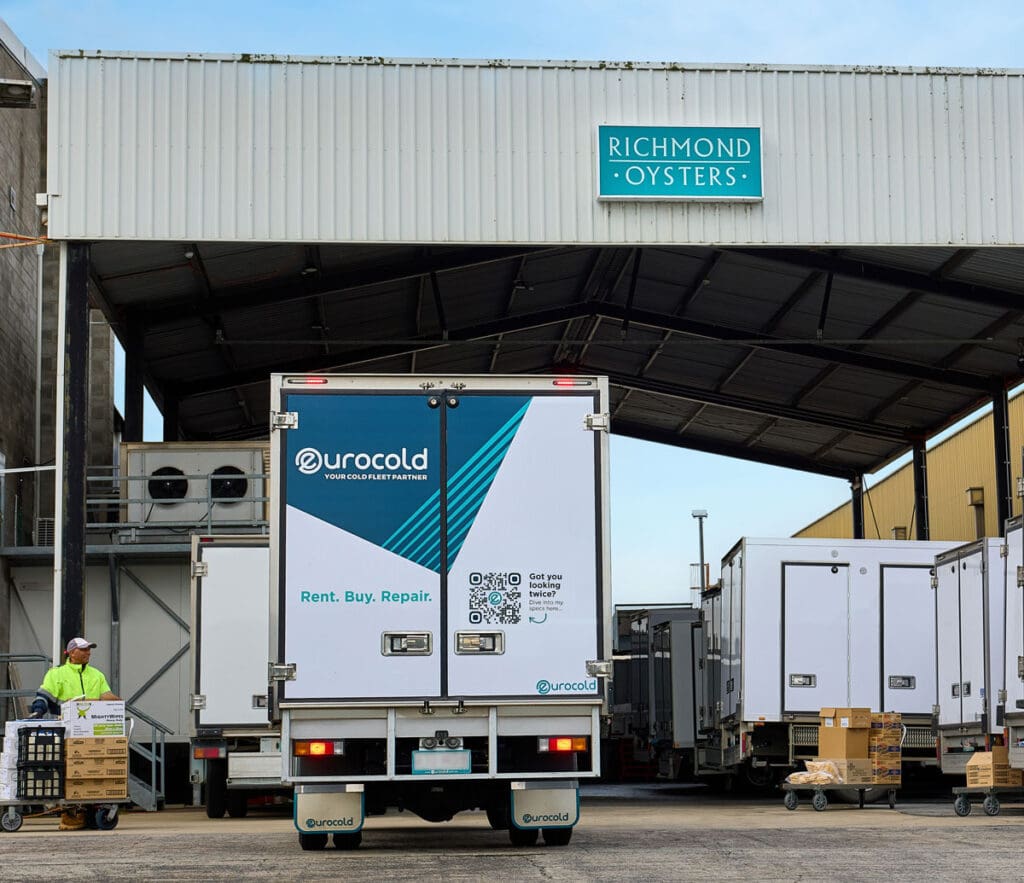
It is 4pm on a Friday. A refrigeration unit drops out somewhere between the Distribution Centre and the last three drops, and by the time the driver calls it in, the decision has already been made for you. The stock is questionable, the customer is waiting, and the next workshop slot is Monday.
In food and beverage, your vehicles are not support equipment. They carry the promise you made to the buyer, and when one stops, that promise stops with it.
The threat worth planning for is rarely the dramatic breakdown. It is inconsistency, and inconsistency is far harder to build a roster around.
Where does the money actually go when a vehicle is off the road?
Most operators can quote their annual maintenance budget. Far fewer can quote what a vehicle being off the road costs them, because the damage is spread across line items that never sit together in one report.
The visible costs are the easy ones to find:
- Emergency repair rates instead of scheduled servicing
- After-hours callout fees
- Parts delays that turn a two-day job into a two-week one
- Sub-hire or third-party transport to cover the route
The expensive ones are quieter. Product written off because temperature was lost mid-route. Labour paid for a shift that could not run. Service level penalties applied by a major retailer. And the slow erosion of buyer confidence that follows a run of late deliveries, which is the one cost you cannot invoice anyone for.
Chilled product that drifts outside +2°C to +8°C does not get a second chance. Neither does frozen stock that climbs above −18°C. One asset failing at the wrong moment can undo months of otherwise faultless performance.
Why does fleet age change the kind of risk you carry?
Newer vehicles do not simply break down less often. They break down more predictably.
With a modern asset on a structured service schedule, you can forecast when it comes off the road and plan the route around it. As a fleet ages, that predictability disappears. Failures cluster, they arrive without warning, and the operational disruption looks nothing like the maintenance line on the P&L.
This is why your fleet age profile matters more than your fleet size. A mixed-age fleet, with some vehicles at two years and others at nine, is far harder to run than one cycled on a consistent schedule.
What is the difference between preventative and predictive maintenance?
These two terms get used interchangeably, and they should not be.
Preventative maintenance is scheduled. Work happens at set intervals to stop failures before they occur. It is a sound baseline, but it is built on averages rather than on what your specific vehicle is doing on your specific route.
Predictive maintenance reads the vehicle itself. Every long-term rental in our fleet includes Vision Trak telematics, real-time vehicle data, location tracking and fridge temperature monitoring, so a refrigeration issue can surface as data before it surfaces as a claim.
The practical benefit is notice. If a vehicle needs to come off the road, the conversation happens in advance and the run gets replanned, rather than starting with a phone call from the roadside.
How do you design uptime in, rather than hope for it?
Uptime is not a workshop outcome. It is decided by four things: how the vehicle is specified, how it is maintained, how it is rotated through its lifecycle, and what happens when it needs replacing.
Our long-term refrigerated truck rental model is built around exactly that. Servicing of both the truck and the refrigeration unit is included, along with registration, insurance, windscreen and tyre replacement, and 24/7 customer support and roadside assistance. Planned replacement keeps your vehicles out of the years where chassis wear and repair bills start climbing steeply.
When something does need attention, it is handled through our own refrigerated truck repair network rather than passed between suppliers, including but not limited to fridge unit work, body repairs, structural modifications and everything in between.
What happens when the work changes?
Demand in food and beverage does not sit still. A contract win, a seasonal peak or a new distribution point can change what you need from a vehicle inside a quarter.
Ownership locks that in. Buy for today’s pallet count and a single contract win can leave you running the wrong truck, with a resale process standing between you and the right one.
A managed cold fleet moves with the work. Our range runs from trailers to 2-pallet utes through to the 14-pallet jumbo, and after the first year of a long-term agreement you have the option to return a vehicle if your requirements have changed, subject to terms and conditions. That is the same flexibility behind our work with P.E. Foods, where fleet capacity had to keep pace with growth rather than dictate it.
Why are more operators rethinking ownership?
The shift has been gradual rather than sudden, and plenty of operators still want vehicles on the balance sheet.
What has moved the conversation is practical. Workshop availability has tightened, qualified mechanics cost more, and property and energy costs have climbed alongside them. Together those pressures have pushed operators to look harder at where capital earns its return.
For many food and beverage businesses, the answer is not a depreciating vehicle. It is production capacity, chiller space, or sourcing.
Why does specification decide uptime before the vehicle arrives?
Most fleet problems are set in motion before delivery day.
Stop frequency, door openings, refrigeration load, ambient conditions and route profile all shape what a vehicle needs to be. Specify it wrong and you build wear in from day one, no matter how disciplined the servicing is afterwards.
That is where body engineering earns its keep. Our vehicles are built at our Berrinba facility — Australia’s first drive-through refrigerated assembly hub — using ISOKIT Isothermal Solutions bodies, designed and engineered in Italy. Better insulation means the refrigeration unit works less hard to hold temperature, and a unit that works less hard is a unit that fails less often.
The part that is hardest to price
When margins are thin and buyers are unforgiving, uptime stops being a workshop metric. It is what holds your revenue, your contracts and your reputation in place.
The strongest cold fleets in this sector are not the ones with the newest badges or the biggest workshops. They are the ones that are never the reason a delivery was late.
Talk to the Eurocold team about building a cold fleet around uptime. Call 1300 222 323 or email [email protected].